Two hours before dawn on a still and perfect morning, I found myself walking with weary eyes past softly sleeping surfers and barely conscious cockerels towards the main highway through Puerto Escondido, one of the world’s most famous surf towns. Standing in the darkness beside the road, with only the occasional flash of passing headlights, I waited for a bus that my hostel receptionist was “pretty sure” existed.
There are not many things that would motivate me out of bed so early in the morning, but I was told on good authority that the mass turtle nesting event, known as an arribada, that was currently entering its fourth and final day, was worth every ounce of sleep-deprived pain. And so, I caught the bus (that did in fact exist) to the little-known beach of La Escobilla, on the magical coast of Oaxaca state, Mexico.
Forty minutes later I was dropped by the roadside, still in darkness, and I followed the track I had been shown on a map by a turtle enthusiast from Puerto Escondido. Out of the blackness the piercing light of a phone torch blinded me, and turtle expert Hericel asked in mumbled early-morning Spanish whether I would like to visit the beach. I accepted, delighted to have made it alive to a place that around 60% of local taxi drivers had never heard of.
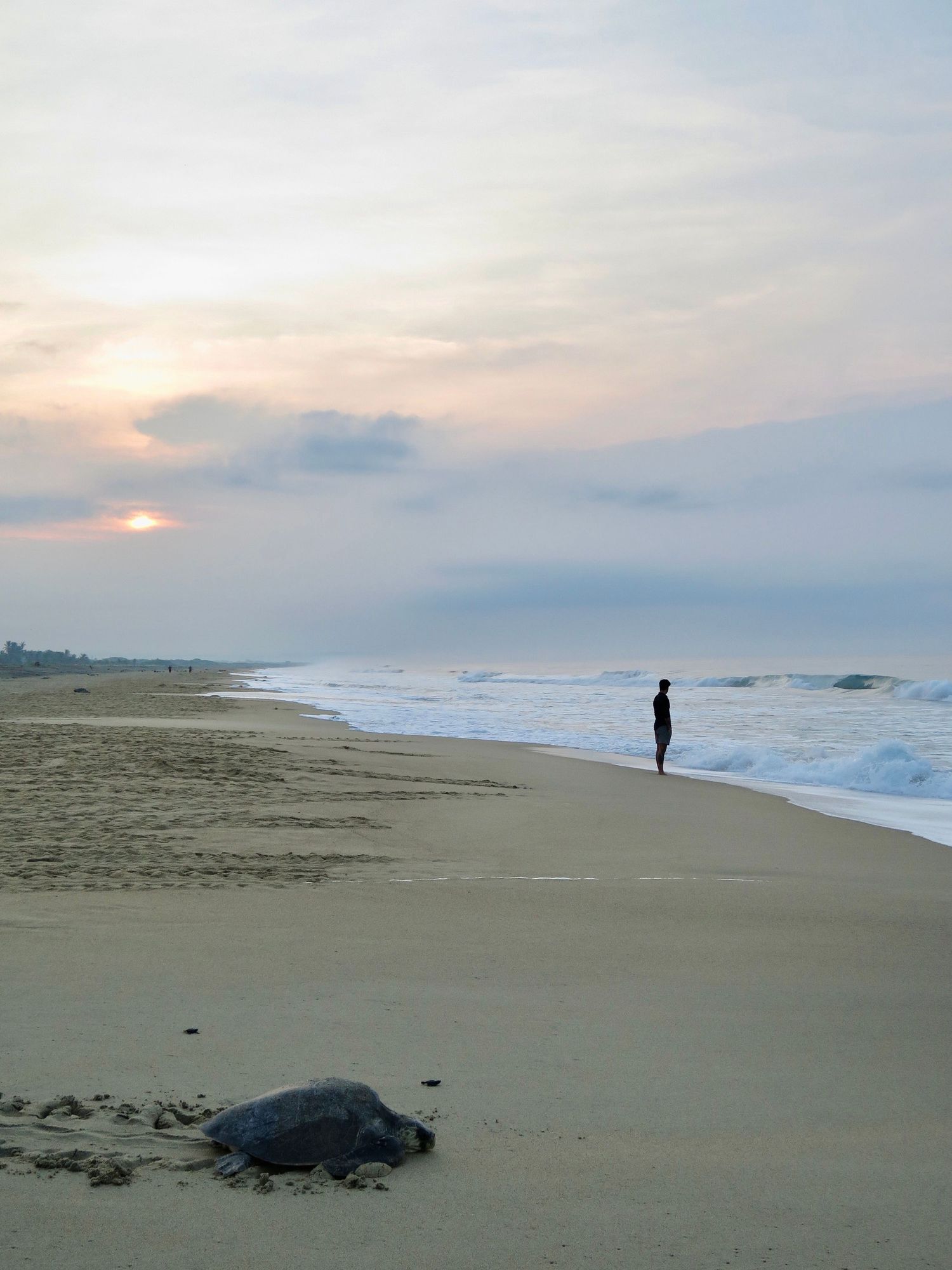
Hericel lead me down a dusty track, illuminating the path for me, until the crash of the waves became distinct. He stopped short of the sand, explaining that he needed permission from the Mexican Marines who guarded the beach in order to proceed. Then, as the salty air brought life to my senses like a mug of fresh coffee, we saw our first turtle. She lay atop a crater of her own making, laboriously brushing sand into the pit with her clumsy flippers. When the job was done, she turned and set off on the exhaustingly long journey back to the water.
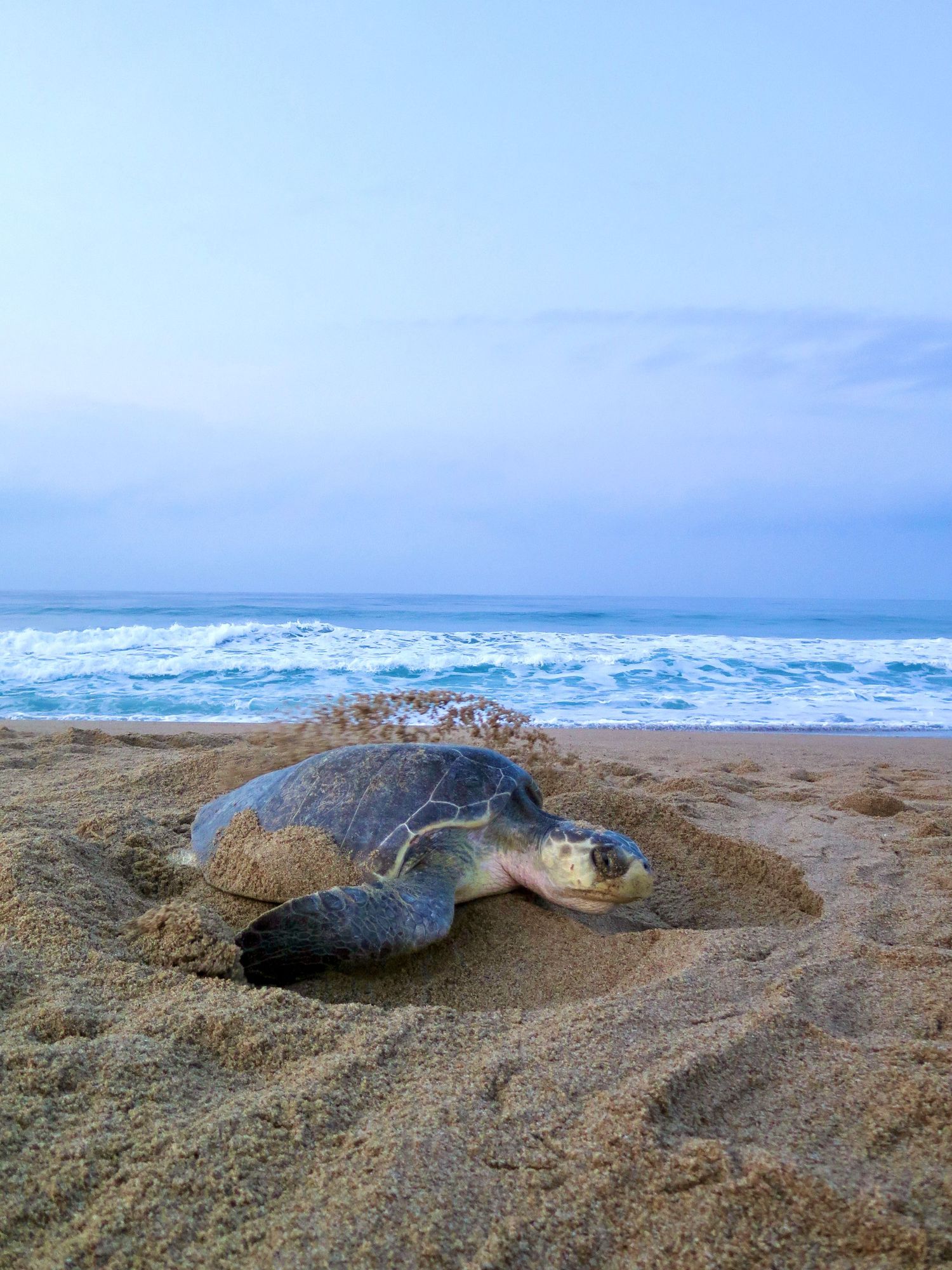
Dig for Victory - a tired Olive Ridley mother covers her nest before returning to the ocean.
As the dawn began to break, the faintly lit sky blessed my eyes with the gift of sight; and what I saw were turtles – hundreds upon hundreds of them, stretching along the beach as far as could be seen. At the water’s edge were tired turtles leaving and heavily pregnant mothers arriving, and every fifteen paces in any direction lay an Olive Ridley giving birth.
La Escobilla is one of only a handful of beaches worldwide where Olive Ridley sea turtles return annually to nest, after migrating many hundreds or thousands of miles across the open ocean from their favourite feeding grounds. All sea turtles, and many other marine species, are gifted with this impeccable sense of direction, but what makes the Olive Ridleys unique is their sense of timing. Every year, Olive Ridleys from all over the world synchronously migrate to the beaches where they were born, gathering en masse for days or weeks just offshore, before descending on the little strip of sand like Omaha on D-Day. Unlike other turtle species, which nest singly, or even in groups by coincidence, the Olive Ridleys’ arribada behaviour is a coordinated birthing ritual, each turtle waiting for the group to be ready before landing.
“I have long considered arribadas to be the most spectacular manifestations of reptile life anywhere,” writes Peter Pritchard, internationally renowned turtle expert, in the authoritative 2007 book on Ridleys, Biology and Conservation of Ridley Sea Turtles. And given the sheer numbers of turtles involved in an arribada event, I am inclined to agree. As many as 50,000 turtles can land at La Escobilla in a single day, Hericel tells me as we promenade past dozens of small humped silhouettes. Annually, over the three or four arribada events between September and December, more than a million Olive Ridleys nest on this one beach.
Adding to the spectacle is the relative rarity of these events. Within five days of the first mothers arriving, the Ridleys are back out at sea, searching for a new mate and some well-deserved nourishment. In those five days, on La Escobilla alone, as many as twenty million eggs will have been laid. And the speed of the event is no accident – Ridleys spend only an hour on the sand between arrival and departure. The quicker the nesting, the lower the risk of predation, exhaustion and heat stroke.
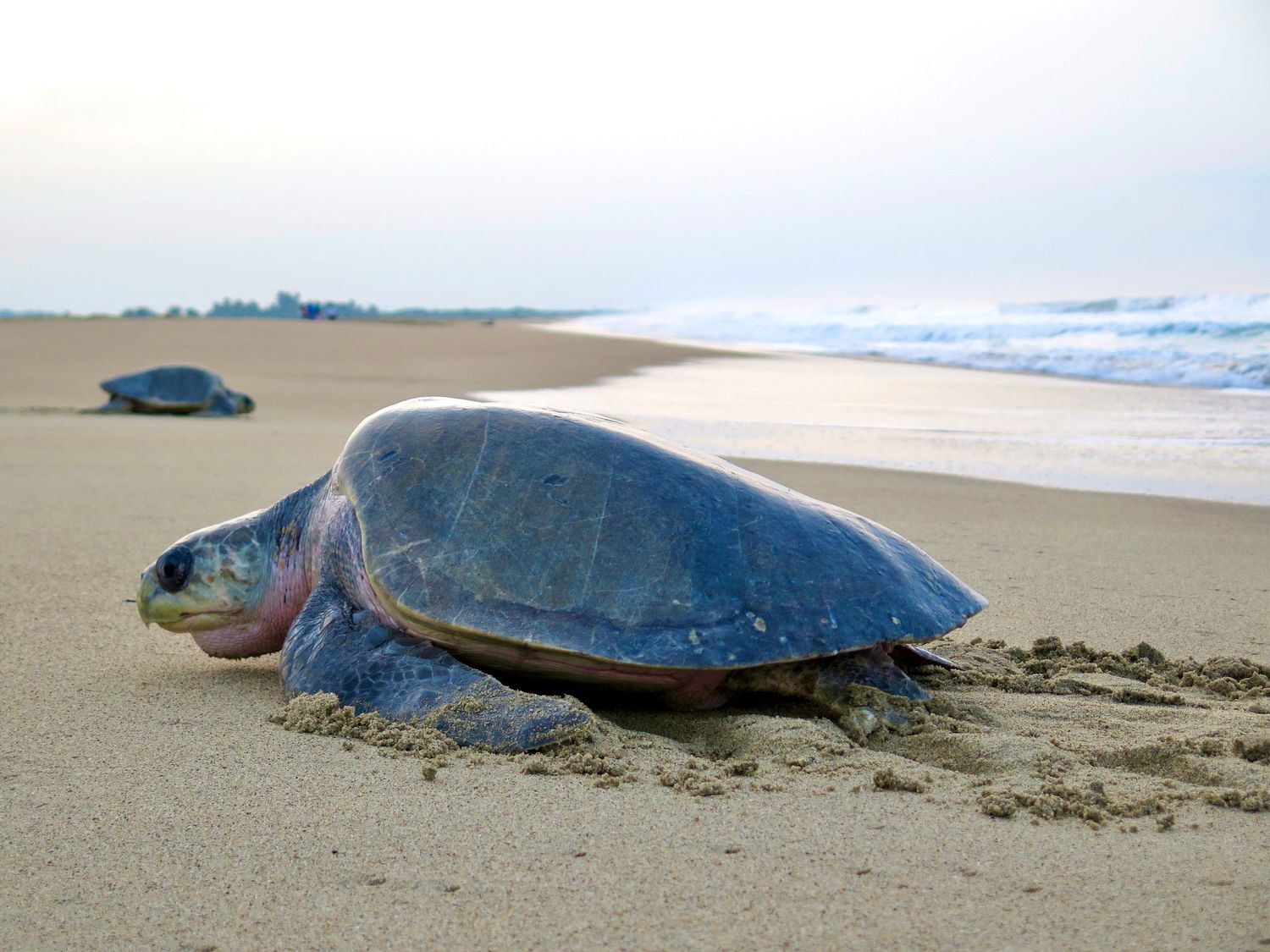
As one turtle leaves, another arrives - the spectacular speed and coordination of the arribada events makes them a true wonder of the natural world.
The purpose of these mass nesting events is not entirely clear. Most experts believe that nesting in these numbers provides relative safety from predation for each egg, though this does not explain why the behaviour is unique to Ridleys. Furthermore, so many mothers fight for space on arribada beaches that a large proportion of eggs laid in the first couple of days are dug up and destroyed by those arriving later during the event. This behaviour is not considered to be an example of evolution by natural selection, as those arriving later are not stronger or fitter than those who come first. Whatever the evolutionary advantage of arribadas, the behaviour seems to be hard wired into the Ridleys’ physiology, even if the exact location of arribada beaches can change on relatively short timescales.
Ironically, it is this hard-wired behaviour, designed to maximise the chance of species survival, that has caused problems for the Olive Ridleys over the last century. The highly repetitive and predictable arribadas, as well as the numbers of turtles at each event, make Ridley mothers and their eggs easy targets of human poaching.
Olive Ridley turtles are perhaps the least studied of all the sea turtles because they have historically been the most abundant. Research grants and conservation efforts have always been directed towards species considered more at risk, such as the Kemp Ridley turtle, and others. Furthermore, the locations of Olive Ridley arribadas have remained unknown to science until relatively recently, some of the largest sites in India being discovered as late as the 1990s. As a result, national and international communities have placed little emphasis on the conservation of Olive Ridleys. At the nesting colony on Isla Ratones, off the coasts of El Salvador, Honduras and Nicaragua, mass egg exploitation has been recorded since 1947, though it has likely happened for a lot longer than is known. And while turtle egg harvesting has been illegal in Mexico since 1927, Olive Ridley harvesting was permitted until 1990.

Not all mothers lay their eggs successfully - those who are tired or sick may not even bother burying their young before retreating to the safety of the sea.
The result of this neglect was the steady decline in Olive Ridley populations, until they too joined other sea turtle species on Appendix 1 of CITES - the list of species threatened with extinction. Due to the lack of archival research into Olive Ridleys, the total population decline is difficult to calculate with certainty, but it is agreed by experts that total decline is likely between 30% and 50% since the 1950s. Between 1950 and 1969, the estimated nesting population at La Escobilla fell from 10 million to just 1 million.
In recent years, however, more research has been devoted to the study of Olive Ridleys, leading to a global conservation effort by national governments and international organisations, though the level of protection offered to Olive Ridleys varies drastically by location. In Mexico, poaching has been banned altogether, and armed Marines patrol arribadabeaches for the duration of the nesting season. Each night, conservationists move a random sample of nests to an incubation centre, safe from predators, and when the eggs hatch 45 days later, tourists can pay a small fee to release them into the ocean.
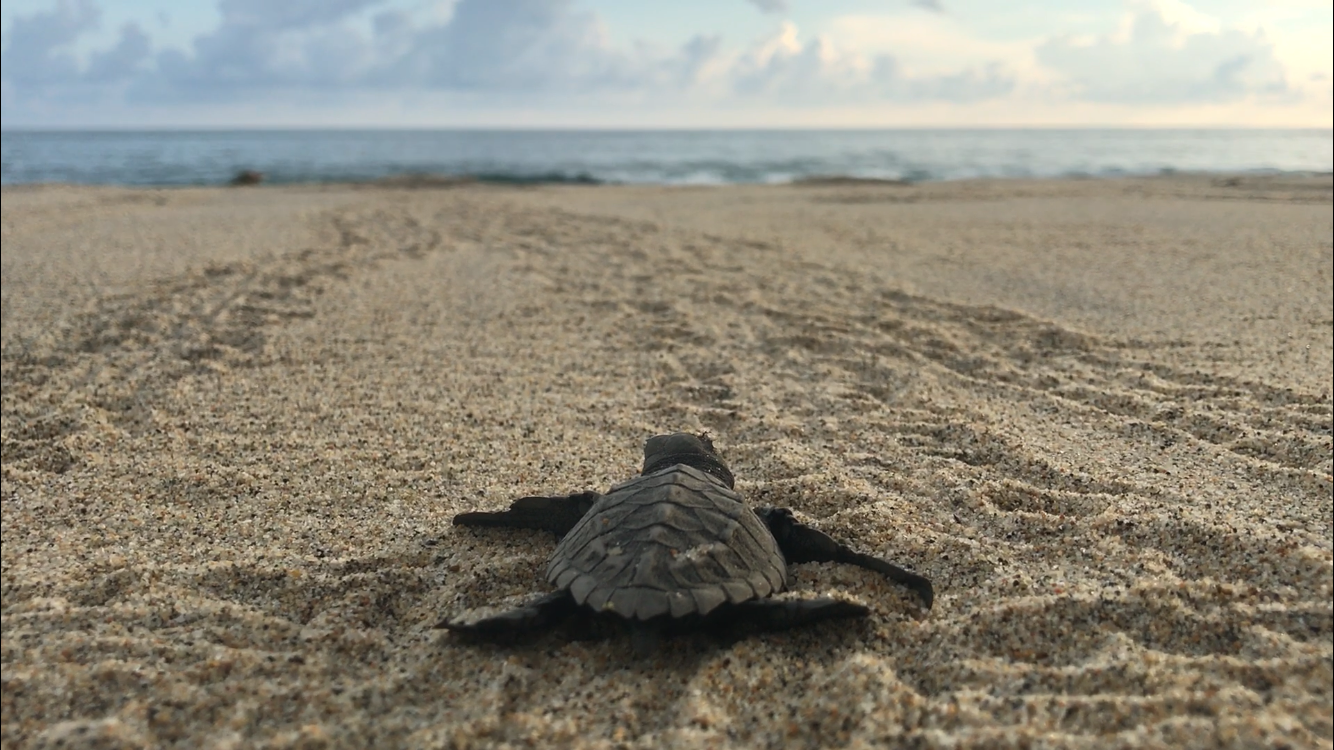
A portion of the eggs at La Escobilla are moved to an incubation centre, and tourists can pay to release the hatchlings when they are born 45 days later.
Other nations, such as Costa Rica, have attempted to implement sustainable egg harvesting: local villagers are permitted to harvest eggs during the first 36 hours of an arribada event, as these eggs are likely to be destroyed by later turtles anyway. In total, around three million eggs are sustainably harvested in Costa Rica each year, satisfying the market demand and supplying locals with a significant source of income. Those involved in turtle harvesting then play a large part in protecting the remaining nests from predators.
The success of these efforts is visible in the most well-managed arribada sites. Numbers at La Escobilla rebounded from 50,000 nests in 1988 to over 700,000 in 1993, and more than a million by 2000. But for the most part, harvesting bans are poorly enforced by national authorities, and global populations continue to decline.
As the tropical sun grew in strength, gently baking the bodies of those unfortunate turtles who didn’t survive the nesting, Hericel smiled with pride at the incredible results he and his colleagues have managed to achieve here. The colony at La Escobilla is one of the world’s largest, and with continuing conservation efforts it may even recover to pre-1950 levels. But there is still a long way to go towards protecting these animals, and their awe-inspiring story of motherhood, which will require the nonpartisan collaboration of governments and authorities the world over. It is clear that where there is a will there is a way, and the Olive Ridleys could be one of humanities greatest conservation success stories if only we can make it happen.